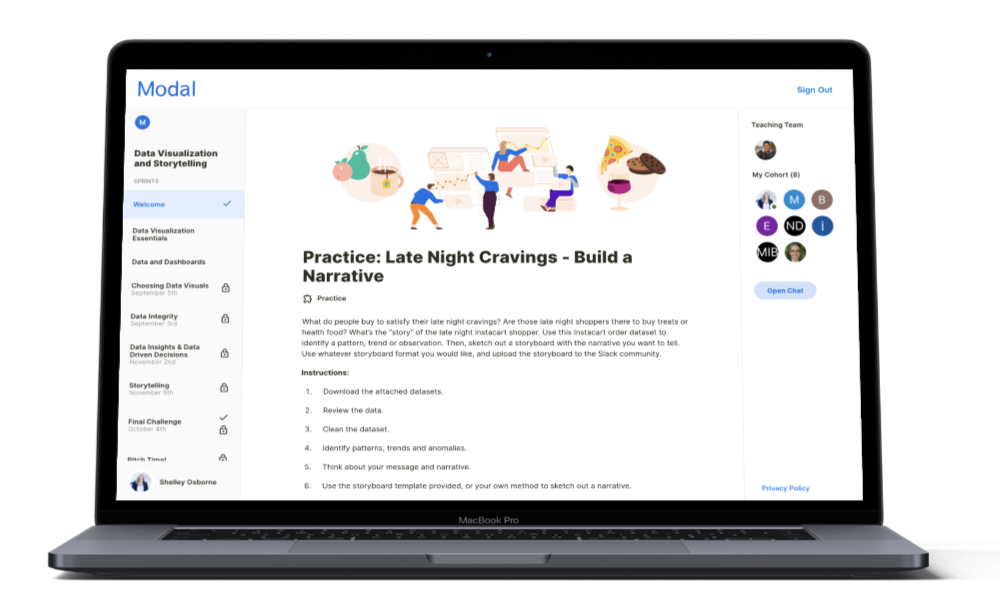
Transform your team's skills to deliver tangible business results.
Learn more


of data teams don't have the business skills they need to understand and drive change in their organizations
of learners say they could make a bigger difference to their organization with more sophisticated data skills
of digital transformations fail due to a lack of adequate skills

Best learner outcomes
Unmatched graduation, satisfaction,
and skills attainment rates
.svg)
Unique to Your Organization
Programs built around your
company's unique needs
ensure relevancy

We win together
Success based pricing means our work is not done until your goals are accomplished

Pay for success, not access
Our business model aligns incentives by only charging customers when learners successfully complete training, demonstrating they have gained new skills.

Plan for the long term
By focusing on the overall vision of what our customers hope to accomplish, we offer more than just course content. Instead, we provide long term talent partnership by developing the team holistically.

Commitment
Our dedicated account managers work with sponsors and learners to ensure that learning resources are focused on the highest impact skills all the time.